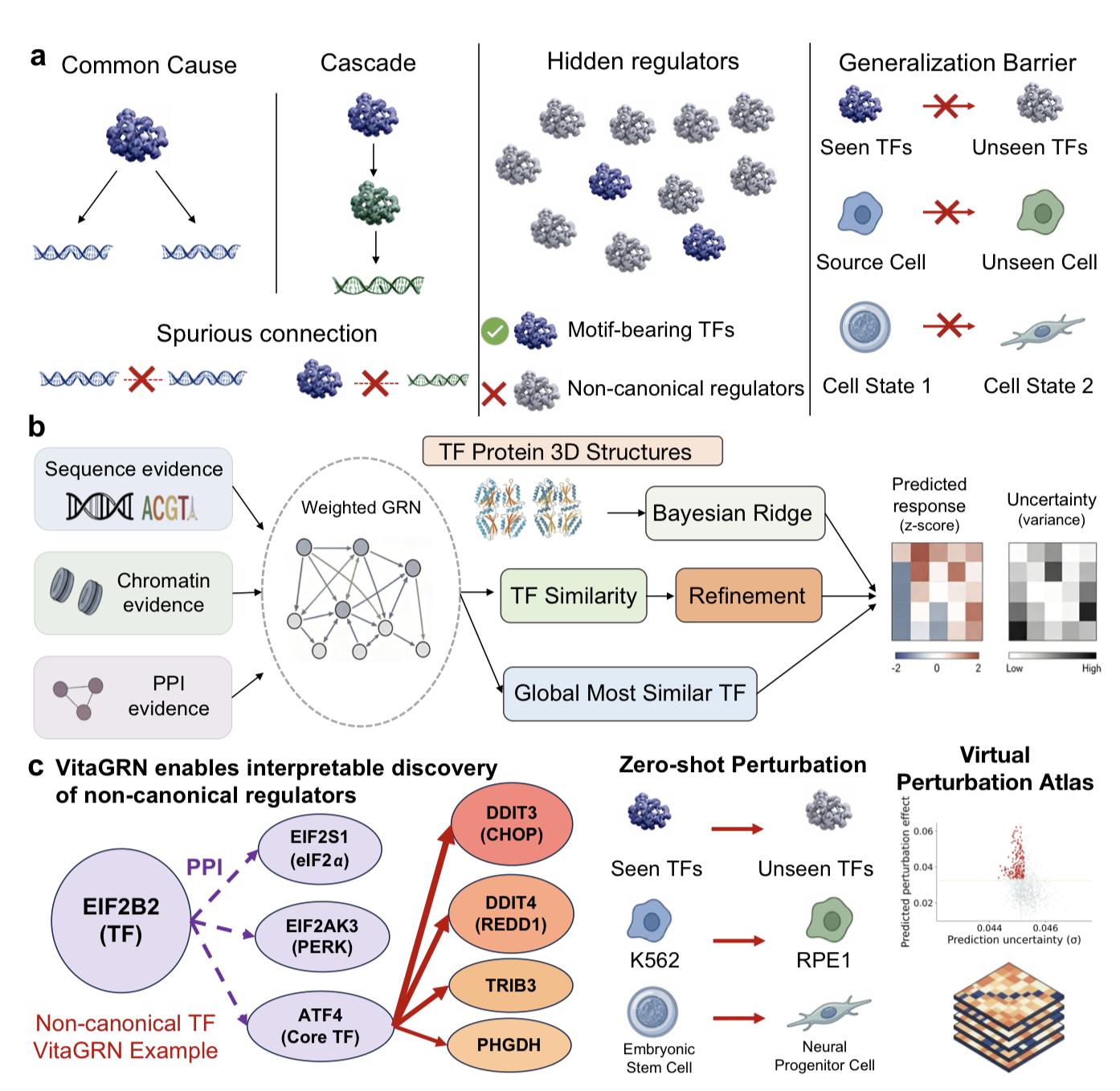
Traditional co-expression and statistical methods for Gene Regulatory Network (GRN) reconstruction often confuse simple co-activation with true biological regulation. This leads to models failing to generalize under zero-shot cellular perturbations (e.g., predicting the cell state after a novel gene knockout).
To address this, we developed VitaGRN, a deep learning framework that integrates multi-source physical evidence—including genomic sequences, chromatin states, protein-protein interactions (PPI), and 3D protein structures—into a biophysically constrained directed graph. By utilizing protein structural embeddings to guide neural perturbation predictions, VitaGRN transcends simple statistical correlations and achieves superior generalization.
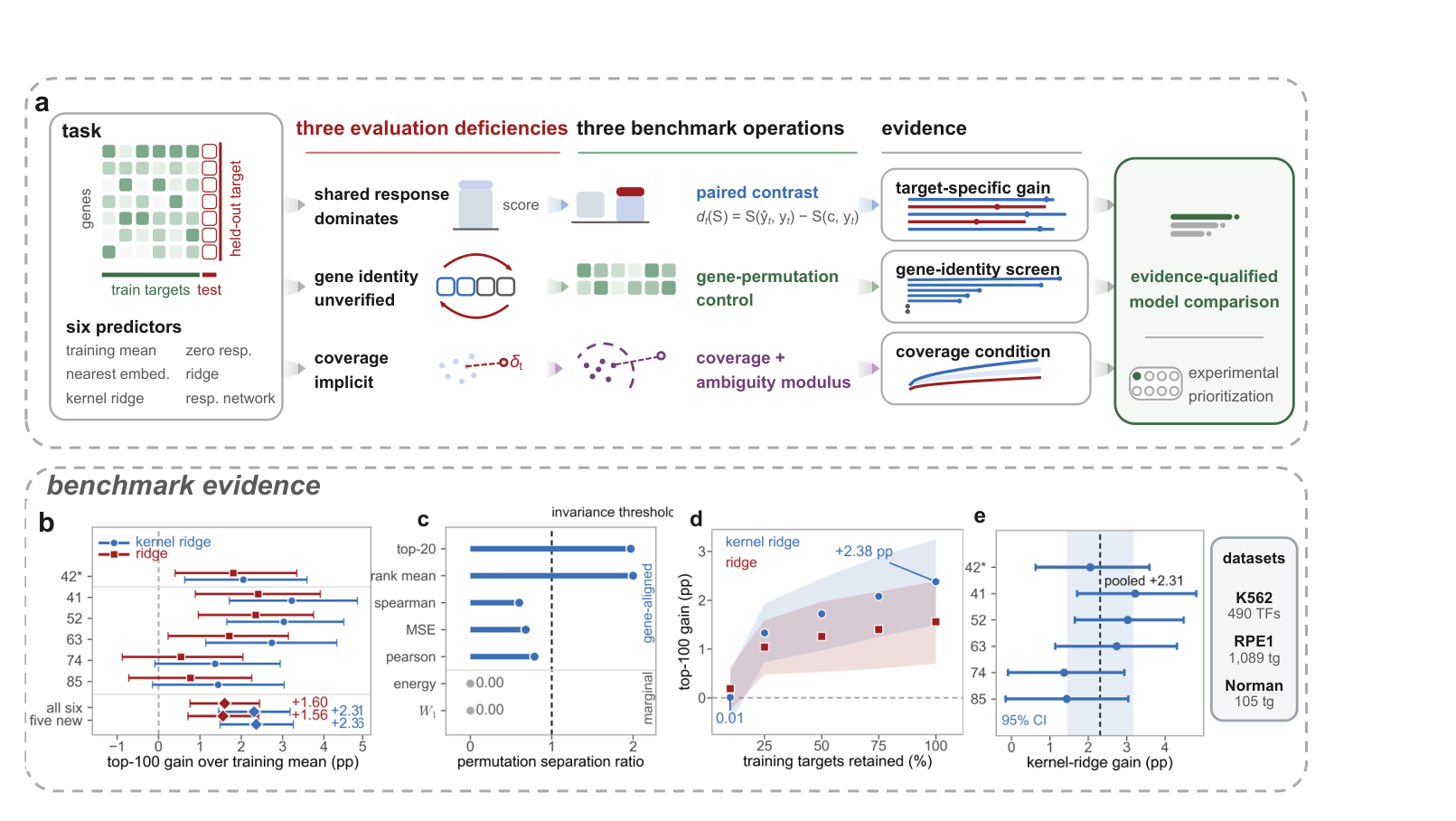
Extensive evaluations demonstrate that VitaGRN outperforms 22 state-of-the-art network inference methods, establishing a zero-shot perturbation atlas across unseen cell lines.